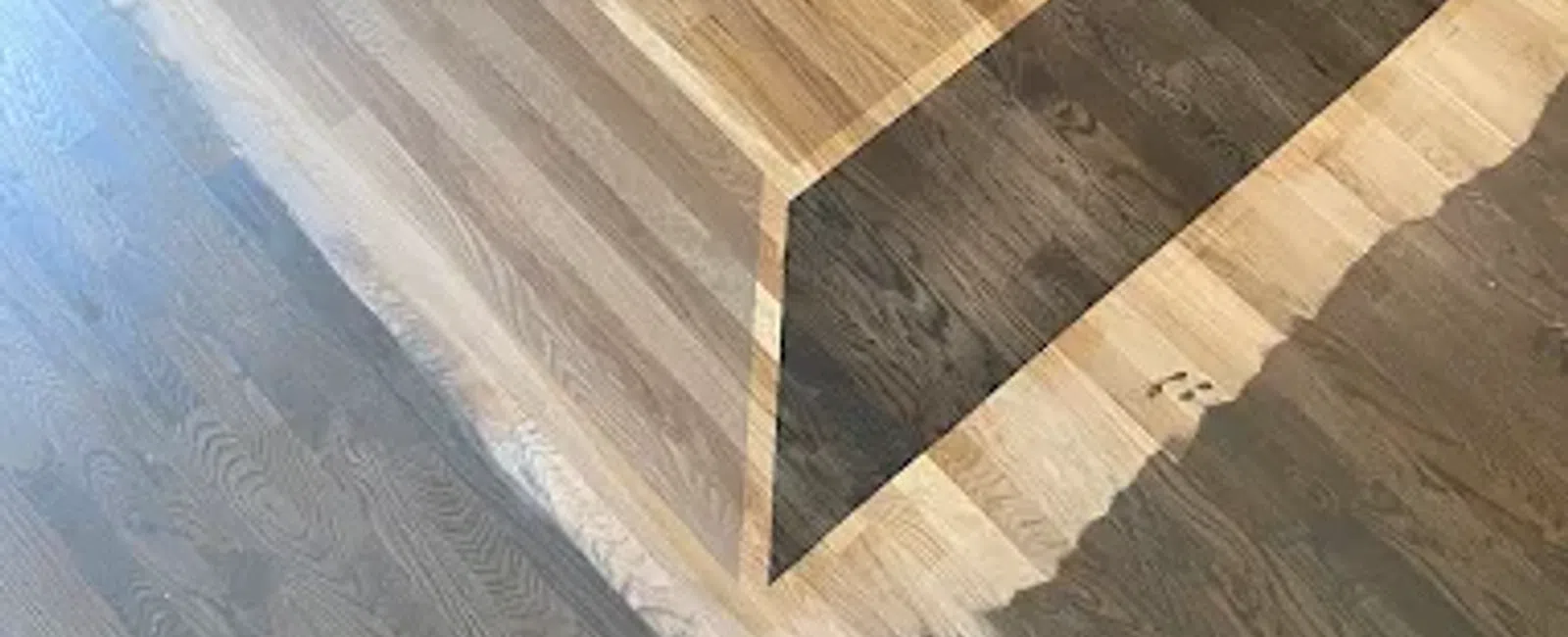
The single most useful thing to understand about hardwood stain is that the color on the can is not the color you get. Stain is transparent. It tints the wood underneath rather than covering it, so the species, the age, and the grain of your floor all contribute to the final result.
This is why the sample board at the store rarely matches your living room. It was made on a different piece of wood.
Species Changes Everything
Most homes in Atlanta have red oak, white oak, or occasionally heart pine. The difference between the first two is the reason so many stain decisions go sideways.
- Red oak has a pink to salmon undertone and a heavier, more open grain pattern. That pink pushes through every stain you put on it. A grey stain on red oak reads as mauve or purple-grey rather than true grey, and a neutral brown reads warmer than the sample.
- White oak has a brown to olive undertone and a tighter, straighter grain. It takes cool tones, greys, and neutral browns cleanly. This is why nearly every grey and greige floor in a magazine is white oak.
- Heart pine is soft, extremely reactive, and ambers dramatically with age. It rarely needs stain at all, and it blotches badly if you apply one without a conditioner.
If you have red oak and you want a cool, greyed, or very light floor, that is achievable but it takes more than picking a can. It generally involves a bleaching or neutralizing step to knock down the pink first, then a stain over the top. That is real work and it costs accordingly, so it is worth knowing before you fall in love with a photo.
The Main Color Families
Natural and Clear
No stain at all, just a clear finish over sanded wood. On white oak this gives a soft, pale, slightly golden floor that has been the default in new construction for years. On red oak it reads noticeably pinker, which some people love and some people do not expect.
Worth knowing: the finish itself affects the color. Oil-based polyurethane ambers over time and will warm a natural floor considerably across ten years. Waterborne finishes stay much closer to the raw wood color. If you want a floor to stay pale, the finish choice matters as much as the stain choice.
Light and Blonde
Whitewash, limed, bleached, and very light natural tones. These are the current default in high-end residential work and they are unforgiving of species mismatch. On white oak they look exactly like the reference photos. On red oak they need pre-treatment.
Practical note: light floors hide dust and show scratches. Dark floors do the opposite. Neither is objectively easier to live with, they just fail in different directions.
Neutral and Greige
The grey-brown middle ground that has replaced pure grey. More forgiving than true grey because the brown component works with oak's natural tone rather than fighting it. This family is where most of our clients land when they want something current that will not date as sharply as the grey era did.
Medium and Golden Browns
Classic warm oak tones. The most forgiving family by a wide margin, because they work with the undertone of both red and white oak instead of against it. They hide wear well, they are consistent across boards, and they read as intentional in nearly any house.
If you are refinishing on a budget or matching to existing flooring elsewhere in the house, this is the safest ground.
Dark Browns and Espresso
Rich, dramatic, and the hardest to live with. Dark floors show every speck of dust, every footprint, and every pet hair. They also show scratches acutely, because a scratch exposes the pale wood beneath the dark stain and creates maximum contrast.
They look extraordinary in photographs and in rooms with a lot of natural light. In a busy household with a dog, they are a maintenance commitment.
Cool Greys and Weathered Tones
Greys have softened from the stark tones of a few years ago into weathered, driftwood, and smoked looks that keep some warmth. These read as deliberate and current, and they suit white oak particularly well. We used this direction on our Chastain Park white oak project, which shows what a weathered tone looks like across a full floor rather than on a sample board.
Two-Tone and Custom Blends
Most refinishers mix stains to hit a specific target, and this is where the real range is. A blend of two standard colors, sometimes with a base coat under a top coat, gets to shades no single can produces. If you have an inspiration photo, bring it. Matching it is usually a mixing problem rather than a product-selection problem.
Minwax, Duraseal, and Bona Do Not Use the Same Names
A color name from one stain brand does not carry over to another, and it does not mean the same thing on a different species either. Minwax's "Special Walnut" on red oak, Duraseal's equivalent number on white oak, and Bona's version of a similar tone can all land noticeably differently, because each manufacturer formulates its pigments and its base differently, on top of the species variable already at play. Asking a refinisher for "Minwax Early American" without also specifying the wood it needs to go on is not enough information to predict the result. The brand matters, but the sample on your own floor still matters more.
The Stain Does Not Wear Out, the Finish Does
The color itself is permanent in the wood and lasts as long as the wood does. What wears out is the polyurethane sitting on top of it, which typically needs recoating every seven to ten years in a normal household and longer in low-traffic rooms. A recoat restores the sheen and the protection without changing the color underneath, so a floor that looks dull after a decade usually needs fresh finish, not a new stain.
How to Actually Choose
The process that works, in order:
- Sample on your own floor, not on a board. Any refinisher should sand a small area of your actual floor and lay down three or four options side by side. This is the only test that accounts for your species, your age of wood, and your light. Ask for it before you commit.
- Look at the samples at three times of day: morning, midday, and under your evening lighting. Colors that look identical at noon can be obviously different under warm bulbs at night.
- Look at them next to what stays, including cabinets, trim, stair treads, and any adjoining flooring. Floors are the largest surface in most rooms and everything else has to live with them.
- Check the sheen separately from the color. Matte, satin, and semi-gloss change how a color reads considerably. Satin is the most common choice because it hides imperfection better than gloss and looks less flat than matte.
- Think about the next ten years, not the next two. Trend cycles in flooring run long, and a floor is not a repaint. Colors that sit closer to the natural tone of the wood tend to age better than ones that fight it.
What Stain Cannot Do
Stain is transparent, so it does not hide problems. Specifically:
- It does not cover deep stains. Dark pet stains and water marks show through, and darker stain colors reduce the contrast but do not eliminate it.
- It does not hide filler or board replacements unless the new wood is the same species and reasonably close in age.
- It does not level grain differences between quarter-sawn and plain-sawn boards, which absorb stain at different rates.
- It does not stop the wood from aging. Oak continues to shift tone with UV exposure regardless of what you put on it.
Timeless color choices tend to be the ones that account for this: tones that sit close to the wood's natural undertone rather than fighting it are the ones that still look intentional a decade later.
Sampling Colors on Your Own Floor First
We sand and sample directly on your floor before any color is committed, so you are choosing from your wood in your light rather than from a board. TriArt Hardwoods refinishes hardwood across Atlanta, Johns Creek, and Sandy Springs. Our hardwood floor refinishing page has more on the process, or our contact page can set up a sample visit.