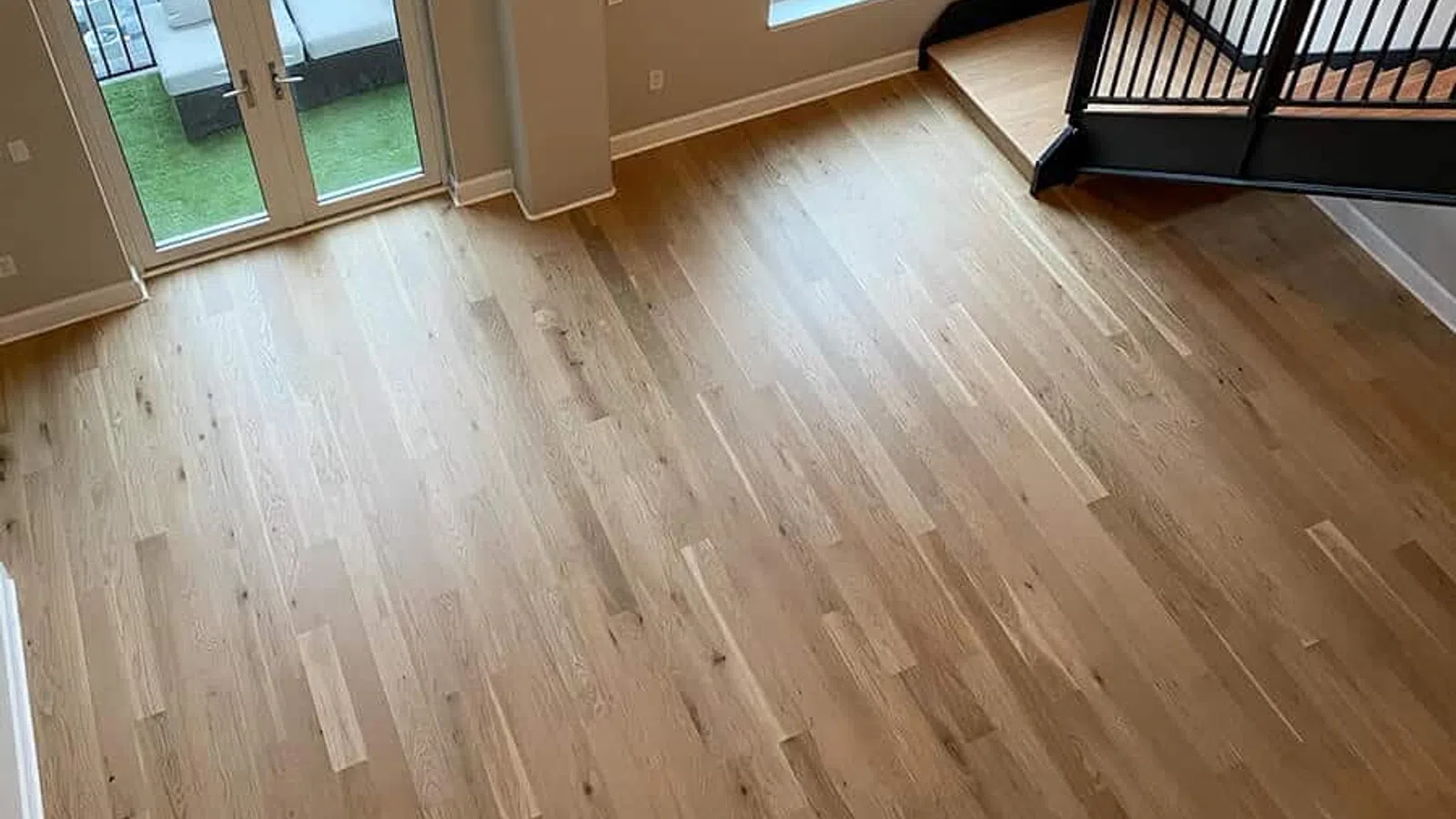
Hardwood Floor Installation in Atlanta, GA
New Wood Floors, Measured and Installed by one crew.
Installation covers more than laying boards. It starts with what is under the floor now, what the subfloor is doing, and how the new wood will meet everything it touches: stairs, thresholds, cabinets, tile.
We handle carpet and tile removal, subfloor prep, stairs and treads as part of the same project, and site finishing when you want a custom color.
Get a free estimate
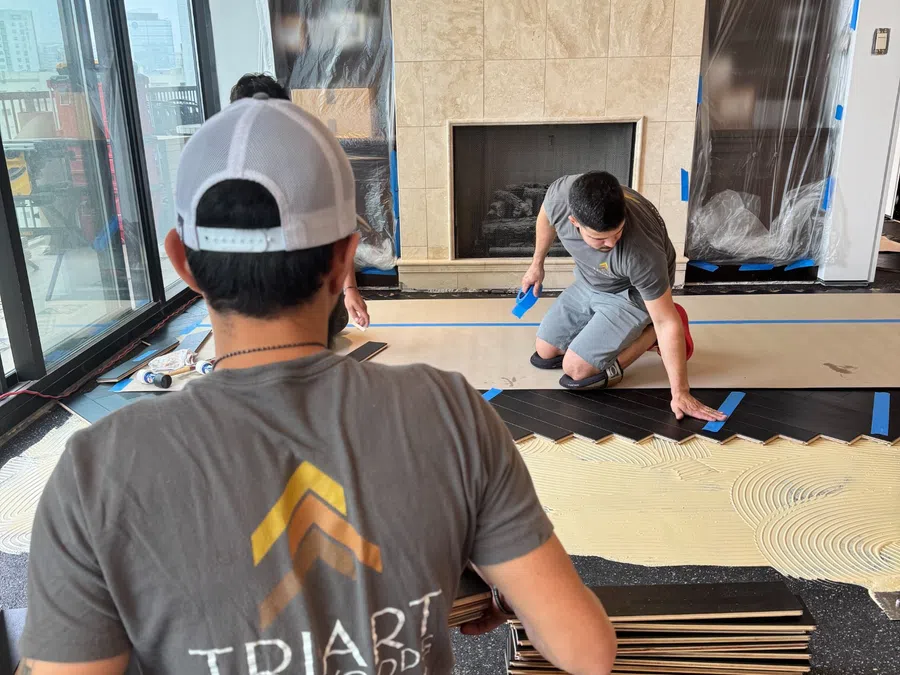
Solid or Engineered: Which Belongs in Your Home
The first decision
Solid hardwood is a single piece of wood, typically 3/4" thick, that can be sanded and refinished many times over its life. Engineered hardwood is a real wood veneer over a dimensionally stable plywood or composite core.
The choice usually depends on the subfloor and location, not preference. Pick where the floor is going, and we will tell you which one we would put there.
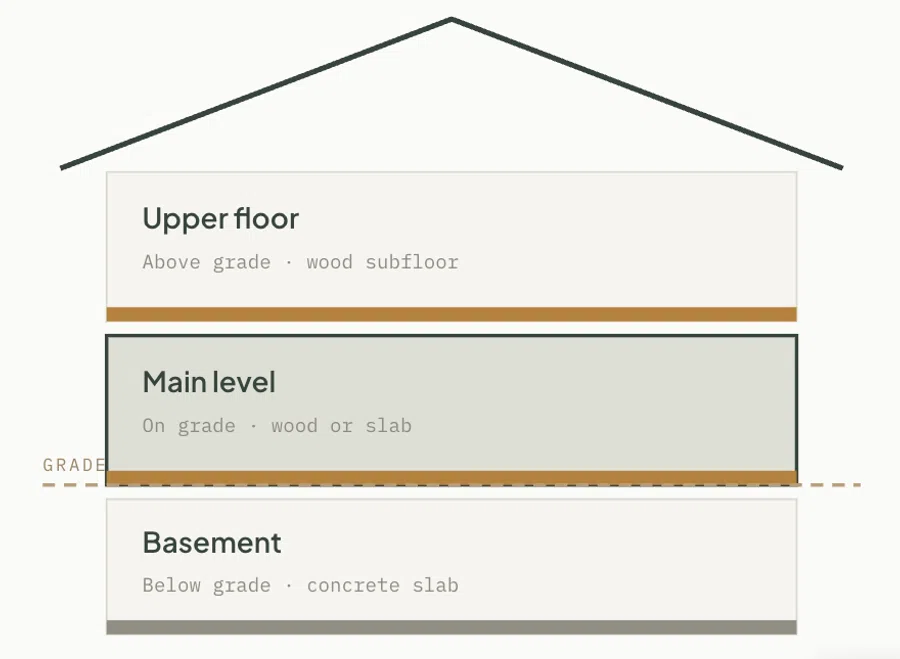
The Right Floor Starts With Where It’s Going
Flooring by Level
Georgia's humidity is why this matters more here than in drier climates. Wood expands and contracts seasonally, and a floor installed without accounting for that will gap in winter or cup in summer. Engineered products move less. A quality engineered floor with a 4mm-plus wear layer can still be refinished at least once.
Subfloor, Moisture, and Georgia Humidity
Before any wood is laid
The most consequential part of an installation happens before the first board goes down. Nearly every floor we are later called to repair failed here, not in the laying.
What Installation Costs
Getting started
Installation cost is driven more by material choice than by labor. Material ranges widely: a standard red oak strip floor and a wide-plank white oak floor are different projects at different prices. We quote in writing after measuring, with material and labor broken out so you can see where the money is going.
Hardwood Installation Questions from Atlanta Homeowners
Installation questions
How long does hardwood floor installation take?
Most residential installations run three to seven days, depending on square footage, whether existing flooring needs removal, and whether the floor is prefinished or finished on site. Site-finished floors add several days for staining and finish cure. Acclimation happens before installation begins and adds a few days to the overall schedule.
Can hardwood be installed over concrete?
Engineered hardwood can work with proper moisture testing and the right underlayment or adhesive system. Solid hardwood generally cannot go directly over slab. This is why basements and slab-on-grade homes in Atlanta usually have engineered floors.
Do I have to remove my old flooring first?
No, we handle removal and disposal: carpet, tack strip, staples, tile, or old vinyl. What is underneath is not fully knowable until it comes up, so we confirm the subfloor condition before the scope is final.
Prefinished or site-finished: which is better?
Prefinished floors arrive with the finish already applied, shortening the project and eliminating finishing odor. Site-finished floors are sanded and finished in place, allowing custom color, a smoother continuous surface without micro-bevels between boards, and the ability to match existing floors. Site-finished takes longer and costs more.
Can you install hardwood in a kitchen or bathroom?
Kitchens: yes, it is common and works well with prompt attention to spills. Full bathrooms are different, and we generally recommend luxury vinyl plank there instead. Standing water and hardwood are a poor combination regardless of finish quality.
Will my new floors match my stairs?
Only if they are done together, or if the stairs are matched to the new floor afterward with careful sampling. Treads are milled from different stock and take stain differently than flooring. We recommend planning stairs into the same project when both are in scope.
Do Atlanta homes on a slab need engineered hardwood?
Usually, yes. Solid hardwood needs a wood subfloor to fasten into, and a large share of Atlanta ranches and nearly every basement here sit on slab. Engineered is dimensionally stable enough to go over concrete with the right moisture barrier. We take a calcium chloride or relative-humidity reading before specifying either.
New Floors Across Metro Atlanta
Where we work
Twelve cities from the Alpharetta showroom. New-build work concentrates in Alpharetta and Milton; in-town Atlanta and Brookhaven bring older subfloors that need more prep before anything gets laid.