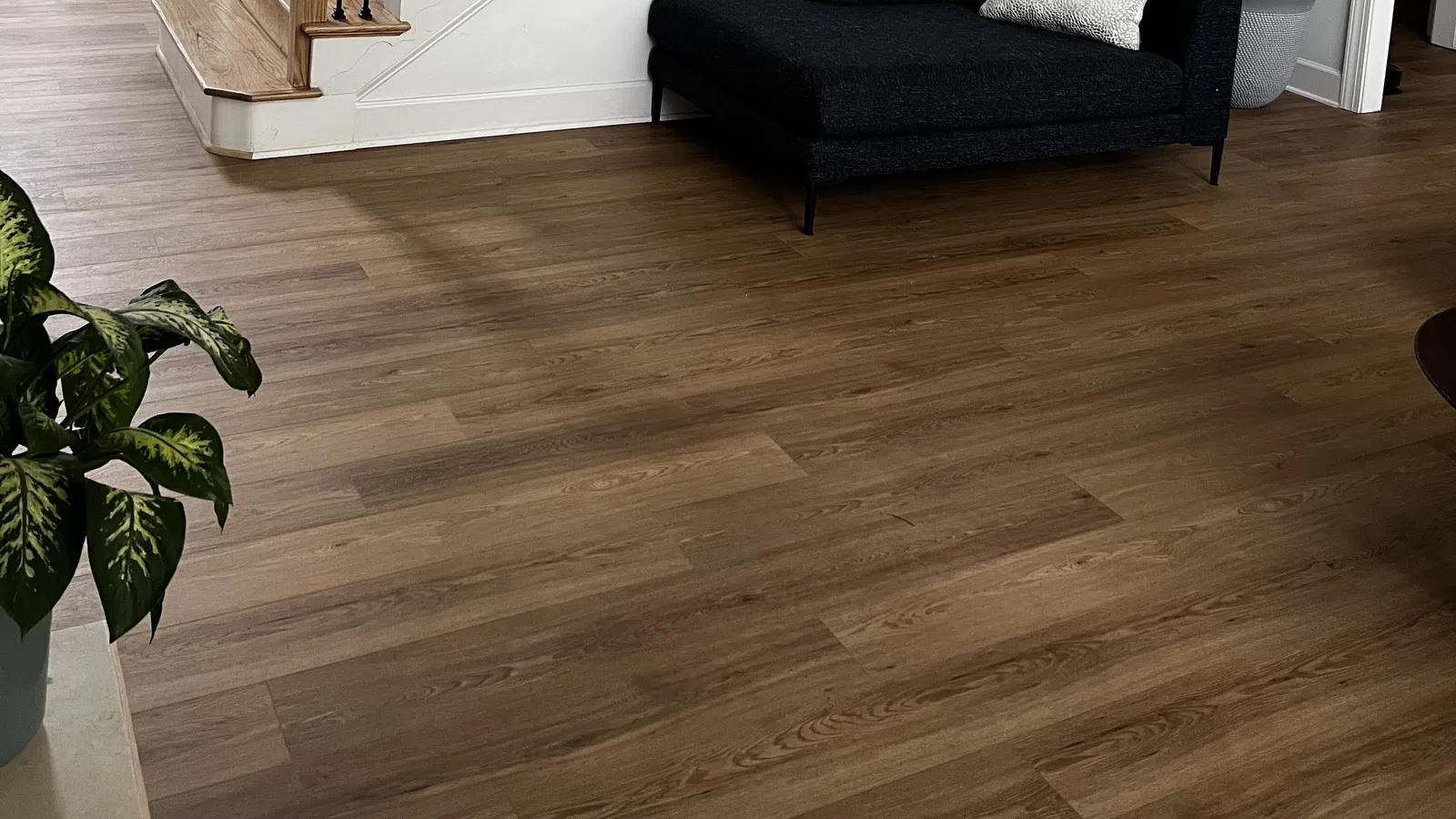
Luxury Vinyl Plank and Waterproof Flooring Installation in Atlanta
When Real Wood Is the Wrong Answer
Get a free estimate
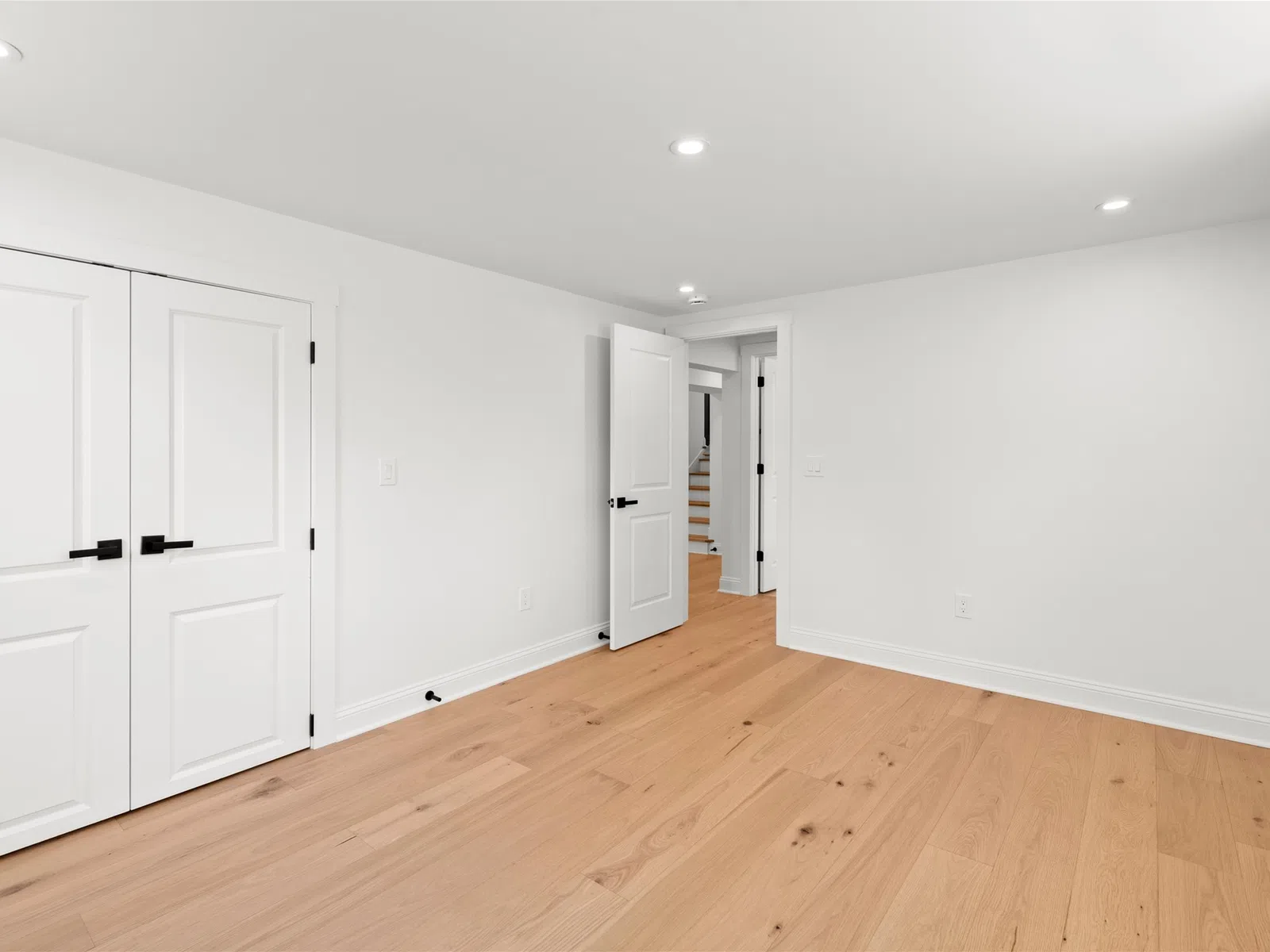
When LVP Beats Hardwood
Basements, kitchens, mudrooms
There are rooms in a Georgia house where hardwood is a bad idea, and no amount of finish quality changes that. A basement on slab that has taken water twice. A mudroom that catches everything off the driveway. A kitchen in a house with two large dogs and a family that does not take shoes off.
Luxury vinyl plank is a printed wear surface over a rigid or flexible core, and the good ones are genuinely waterproof through the whole assembly, not just on top. Standing water does not swell the core, cup the plank, or lift the edges. That is the single reason to choose it, and it is a good one.
It does not replace wood everywhere. LVP cannot be refinished, so when the wear layer goes through, you replace the floor rather than restore it. On a main level that a family will keep for twenty years, solid hardwood is still the better investment. We will tell you which room is which rather than quoting whichever product has the better margin. If the wood you already have is sound but tired, refinishing it beats replacing it with anything.
How Vinyl Plank Is Actually Fitted
Click-lock, glue-down, loose lay
Three fitting methods, and the room decides which one you get. An expansion gap is where most failed LVP jobs start. A floating floor that has been fitted tightly to the wall has nowhere to go when the room warms, and it peaks in the middle. We leave the gap the manufacturer specifies and cover it with base shoe.
Click-lock, floating
Most residential rooms
The planks lock to each other and not to the subfloor, so the whole floor moves as one sheet with an expansion gap at the perimeter. Fastest to install, easiest to replace a damaged plank, and the right answer in most residential rooms.
Glue-down
Heavy loads, temperature swings
Bonds each plank to the subfloor with adhesive. More work and more disruption, but it holds better under heavy rolling loads and in rooms with large temperature swings, which is why it turns up in sunrooms and commercial spaces.
Reading a Spec Sheet Without Getting Sold
Wear layer and mil thickness
The number that matters on an LVP spec sheet is the wear layer, and it is quoted in mils rather than millimeters.
6
mil wear layer
Builder grade. Belongs in a rental, and it will show traffic patterns inside a few years in a family home.
12
mil wear layer
A reasonable residential floor. Adequate for a low-traffic room without pets or heavy foot traffic.
20+
mil, what we specify
Holds up in a busy house with pets, and what we specify for most Atlanta homes. This is the number to compare, not total thickness.
Transitions, Thresholds and Stair Noses
Our recent installs
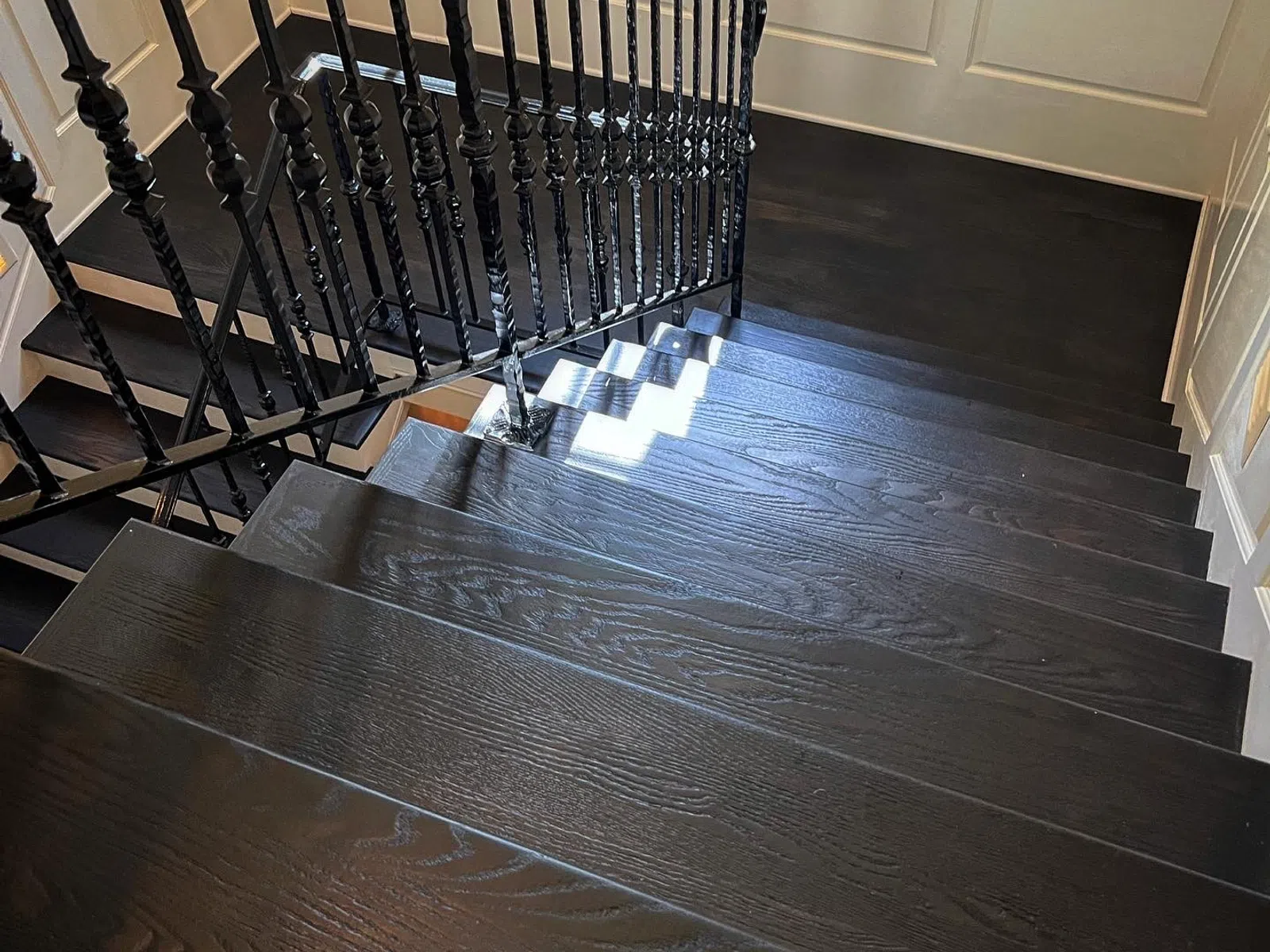
Close-ups from installs this year. Six image slots, all shot on site.
What Happens Before the First Plank Goes Down
Subfloor, moisture, transitions
Waterproof describes the plank, not the room. A floor that cannot be damaged by water sitting on top of it can still fail because of what is happening underneath it.
On a slab, we take a calcium chloride or relative humidity reading before specifying anything. A slab pushing moisture upward will not harm the LVP, but it will grow mold under a floating floor and break down glue-down adhesive. Where the reading is high, the answer is a moisture barrier or a different approach, not a shrug.
Flatness matters more with LVP than with wood. A rigid plank bridging a dip in the subfloor flexes at the joint every time somebody walks on it, and eventually the lock fails. We check with a straightedge and fill or grind where needed.
We remove the old flooring, along with tack strip, staples, and any adhesive residue. We plan transitions to adjoining rooms before we start, because a floating floor needs a break at doorways where it meets a fixed floor. If the adjoining room is wood, we match the transition, and if that wood needs attention while the floor is open, we can handle board repair in the same visit.
LVP Questions from Atlanta Homeowners
Before you choose a product
How much does luxury vinyl plank installation cost?
LVP installation is priced by square footage, and material choice moves the number more than labor does. A 6 mil builder-grade plank and a 20 mil SPC floor are very different products at very different prices. Removal of existing flooring, subfloor levelling, and transitions all factor in. We measure and quote in writing with material and labor separated.
Is luxury vinyl plank really waterproof?
The plank is, in the sense that standing water will not swell or cup it. The room is a separate question. Water that gets under a floating floor has nowhere to evaporate to and can grow mold beneath a perfectly intact surface. Waterproof flooring reduces the damage from a spill, it does not fix a leak.
Can LVP be installed over my existing tile or concrete?
Often, yes, and it is one of LVP's practical advantages. Over tile, grout lines need filling if they are wide enough for the plank to flex into. Over concrete, we take a moisture reading first and check flatness. Both are assessed during the estimate rather than assumed.
Can vinyl plank flooring be refinished when it wears out?
No. The wear surface is a printed layer under a clear coat, and once that has gone through there is nothing underneath to sand back to. This is the real trade-off against wood. A hardwood floor can be sanded and refinished several times across its life; an LVP floor gets replaced.
What thickness of LVP should I get?
Look at the wear layer rather than the total thickness. 12 mil is adequate for a low-traffic residential room, 20 mil and above is what we specify for most family homes and anywhere with dogs. A thick plank with a thin wear layer will show traffic patterns before a thinner plank with a heavier wear layer does.
Can you put LVP on stairs?
Yes, with stair-nose trim milled to match the plank. It is a more exacting fit than a floor because every tread needs its own cut and the nosing has to sit exactly right underfoot. Where the rest of the house is wood, we would usually recommend solid oak treads on the stairs and LVP on the level below, since stairs rarely take the water that drove the LVP decision in the first place.
Is LVP a better choice than hardwood for an Atlanta basement?
Almost always, yes. Basements here sit on slab, and slab moves moisture upward even when the room feels dry. Waterproof LVP over a moisture barrier handles that; solid hardwood does not. We take a slab reading before specifying either, because the number decides the product rather than preference.