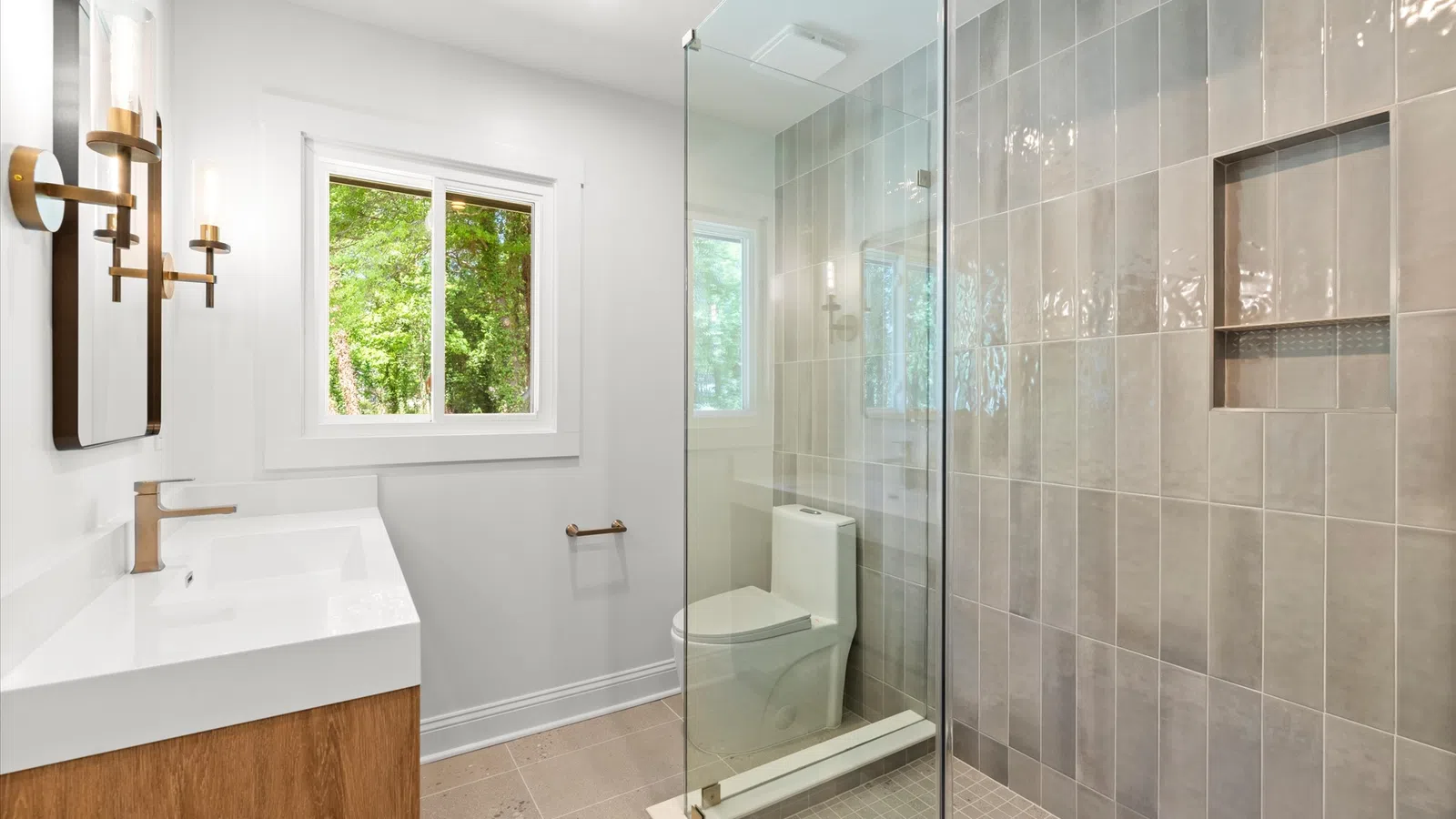
Bathroom Remodeling in Atlanta, GA
Waterproofed Before It Is Tiled
Get a free estimate
What a Bathroom Rebuild Actually Involves
Demo, rough-in, finish
A bathroom is the most trade-dense room in a house. A 40-square-foot floor can involve plumbing, electrical, framing, waterproofing, tile, and glass, so coordination matters more than any single material choice. Where the bathroom adjoins hardwood floor installation, we plan the transition before demolition rather than solve it afterward. If the adjoining floor needs attention while the room is open, we can handle board repair on the same visit.
Demolition and what it reveals
Old bathrooms hide the previous owner's decisions. Rotted blocking behind a tub surround and a subfloor softened by twenty years of a slow toilet leak are both common, and neither is knowable until the room is open.
Rough-in and inspection
Supply and waste relocated where the layout changes, GFCI circuits, exhaust ventilation ducted outside rather than into the attic. Inspected before anything closes.
Waterproofing, then finish
Install the substrate, membrane, and slope before installing a single tile. Then tile, grout, glass, fixtures, and trim.
The Layer Nobody Sees and Everybody Pays For
Under the tile, before the tile
Tile is not waterproof. Grout is not waterproof. Both are porous, and water moving through them is normal and expected. What stops that water from reaching your framing is the assembly underneath, and it is the part of a bathroom that is invisible the day it is finished and expensive the day it fails. We waterproof to the manufacturer's published specification for the system we are using, because that is what the warranty is written against.
Three Bathrooms, One House: What That Actually Takes
From the job sheets
On our own Cobb County renovation we rebuilt three bathrooms end to end, all fully permitted. It is the clearest set of work we can show, because it was our money and our decisions.
Fold the Content Under the Tile Section
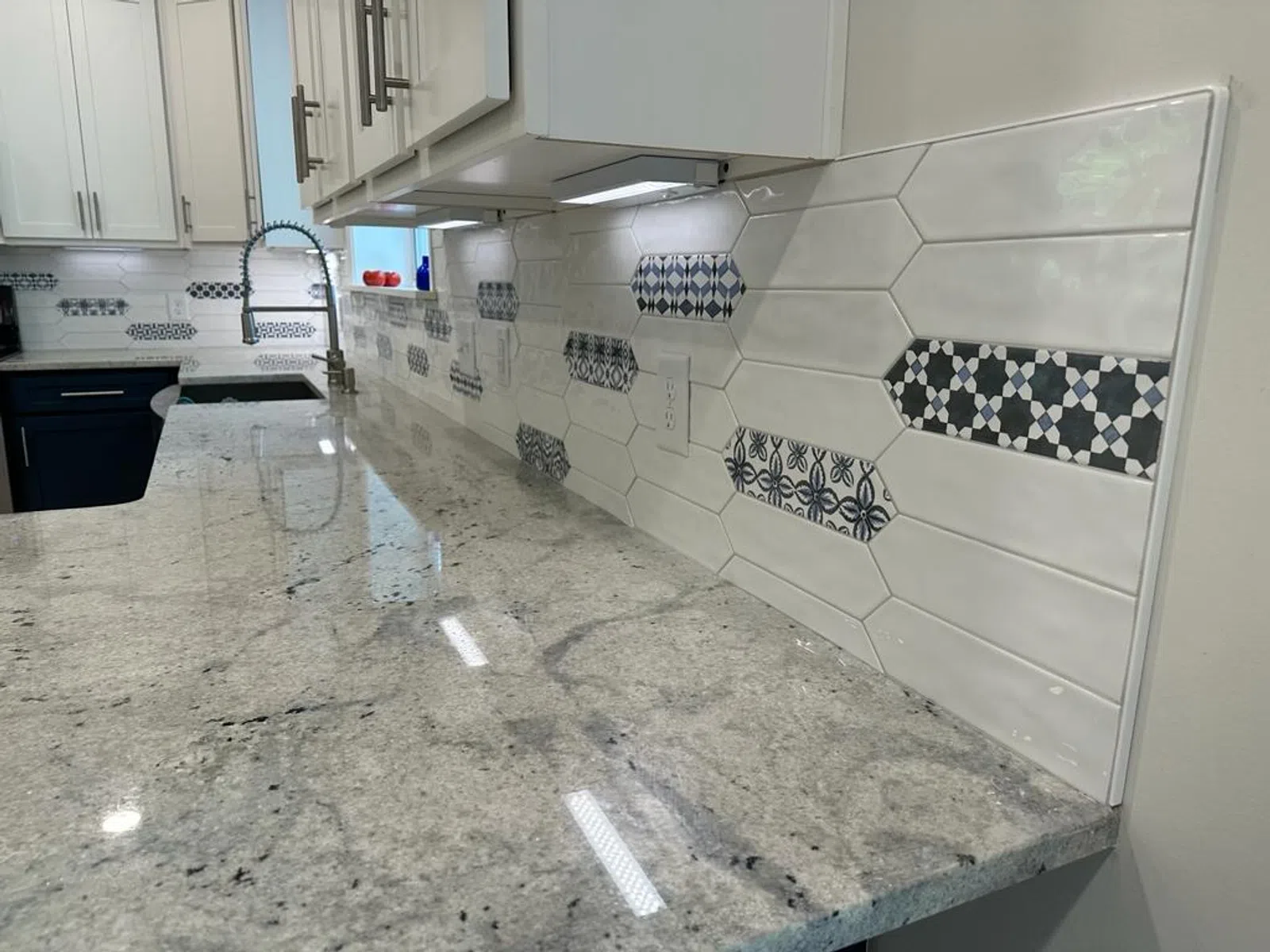
Backsplash Installation
A backsplash is the same tile-and-substrate work as in a bathroom; you can use it in a room, too. Most are a two- to three-day job; the kitchen stays functional through it, and it changes the look of the room more per dollar than anything else you can do to a kitchen.
What matters underneath is different from a wet room, but it still matters. The wall has to be flat, because a tile that is out of plane at the counter shows against a straight countertop edge in a way it never would on a bathroom floor. Outlets and switches need spacers set to the new tile depth before anything goes on. And the joint where tile meets counter is caulked rather than grouted, because those two surfaces move independently and grout will crack there every time.
We do backsplashes as a standalone job and alongside bathroom work. We do not do full kitchen renovations, which require a different trade mix and are a specialty in their own right.
How Long a Bathroom Takes and Why
Two to four weeks, usually
Most full bathroom rebuilds run two to four weeks, and the variation is almost never the tiling. It is waiting: for inspection between rough-in and close-up, for a membrane to cure before tile, for custom glass to be measured and fabricated after the tile is set.
Bathroom Remodeling Questions from Atlanta Homeowners
Before you commit to a layout
How long will we be without the bathroom?
Two to four weeks for a full rebuild. The unavoidable parts are inspection between rough-in and close-up, membrane cure before tile, and custom glass lead time after the tile is set. If it is your only bathroom, say so on the first call, and we will sequence around it.
Why do tiled showers leak?
Almost always because of what is behind the tile rather than the tile itself. Tile and grout are porous by design, and the waterproof membrane underneath is what actually stops water. Failures concentrate at corners, changes of plane, and anywhere standard drywall was used in a wet area instead of a proper substrate.
Do you need a permit for a bathroom remodel?
It depends on scope and jurisdiction. Replacing finishes in place often does not require one, while moving plumbing or altering electrical generally does. We pull permits where they are required and handle inspection scheduling. Unpermitted work surfaces at the closing table, which is the worst possible time to find it.
Can you match the bathroom floor to our hardwood?
Not exactly, and you should not want us to. Hardwood doesn't belong in a full bathroom, so the honest options are tile in a tone that complements the wood or waterproof plank with a matching look. We plan the transition at the threshold before demolition so it reads as deliberate.
Do you do kitchens too?
A backsplash is tile and substrate work, which we do every day. A full kitchen is cabinetry, appliances, and a different trade mix, and a dedicated kitchen remodeler will do it better than we would.
How much does a bathroom remodel cost in Atlanta?
Tile selection and whether the layout moves drive the number more than square footage does. Keeping plumbing where it is keeps the project in a much lower band. Moving a toilet or shower means opening the floor, which is where budgets change. We quote in writing after seeing the room.